Lower Elementary
(Grades 1-3)
Inspiring curiosity and self-motivation while fostering independence, collaboration, and problem-solving.
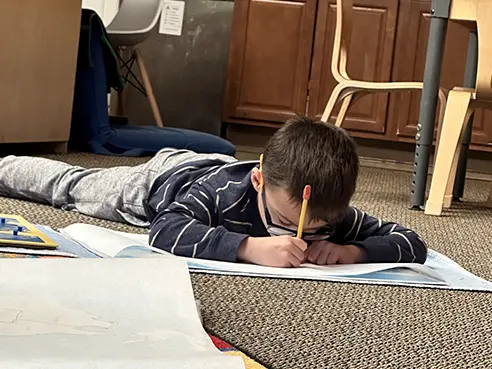
Teachers, often referred to as guides, connect students with lessons and materials designed to spark curiosity and independence. The classroom is structured to balance freedom and responsibility, allowing each student to follow their individual learning path while building foundational academic and social skills.
Teachers give lessons in small groups or one-on-one, observing each child’s progress and offering opportunities to repeat, practice, and master new concepts. The goal is to inspire curiosity and self-motivation while fostering independence, collaboration, and problem-solving.
Grades 1-3 combined in a mixed-age classroom
8:45 am – 3:45 pm
Curriculum
At Sterling, the Montessori curriculum is presented through Cosmic Education, helping children understand the interconnectedness of all things in the universe. Subjects are integrated rather than separated, and include:
- Language Arts: Reading, writing, grammar, and literature exploration
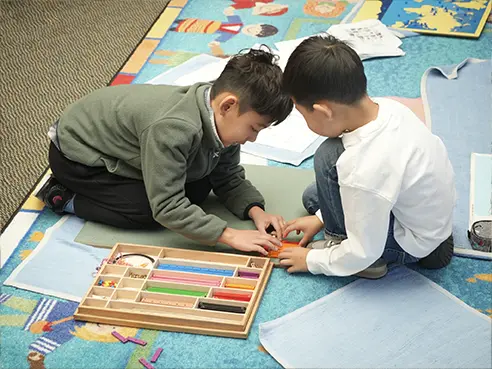
- Mathematics: Concrete materials that lead to abstract understanding of number, operations, and geometry
- Cultural Studies: Geography, history, life and physical sciences
- Practical Life: Time management, responsibility, care of self and environment
- Peace Education: Grace and courtesy, conflict resolution, and empathy-building
The three-year learning cycle allows each student to progress at their own pace, deepening understanding each year.
Second Plane of Development
The Lower Elementary classroom nurtures the needs of children in the second plane of development (ages 6–9), characterized by:
- A growing sense of justice and morality
- Heightened imagination
- Expanding intellectual curiosity
- Increasing independence and group collaboration.
Students in this stage are developing their sense of belonging, responsibility, and the ability to think beyond their own experiences.

Learn More About Montessori
Explore the principles behind the Montessori method and what they look like in our classrooms. Gain a clearer understanding of how this approach supports children at every stage.
The Sterling Difference
Key Characteristics
- 2–3 hour uninterrupted morning work cycle
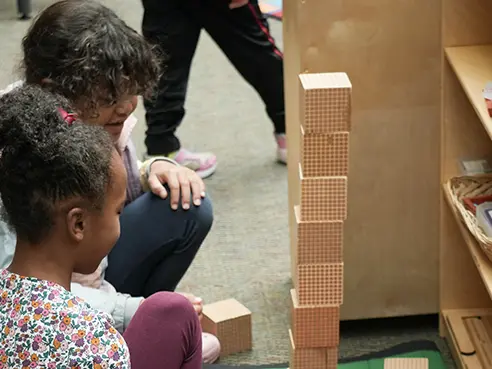
- Hands-on learning with Montessori materials
- Regular teacher-student goal-setting conferences
- Integration of North Carolina Standards into the Montessori curriculum
- Specials: Art, Music, and Physical Education
- Spanish Language instruction begins in 3rd grade

Typical Daily Schedule
8:45–11:30 a.m. — Morning Work Cycle
11:30–12:30 p.m. — Lunch/Recess
12:30–3:45 p.m. — Specials / Afternoon Work Cycle